3D Wooden Children s House Box Laser Cutting Other Toys Amp
When I first pulled up the preview for the 3D Wooden Children s House Box, my immediate reaction was less about nostalgia and more about commercial viability. As a digital product creator who has spent years optimizing listings for Etsy, Creative Fabrica, and Shopify, I look at every new asset through a specific lens: Does this solve a problem? Does it evoke an emotion that drives a click? And most importantly, can it be repurposed across multiple revenue streams without feeling forced?
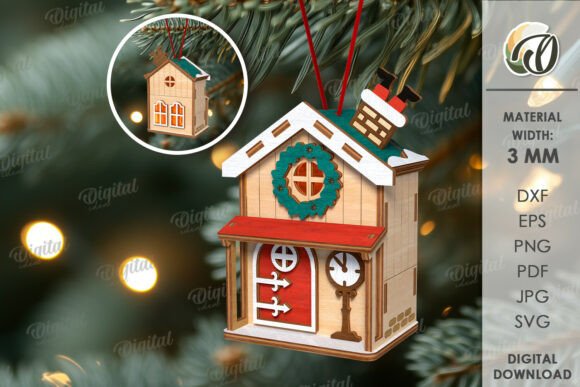
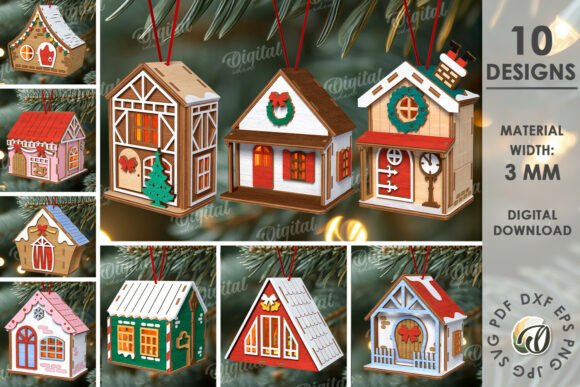
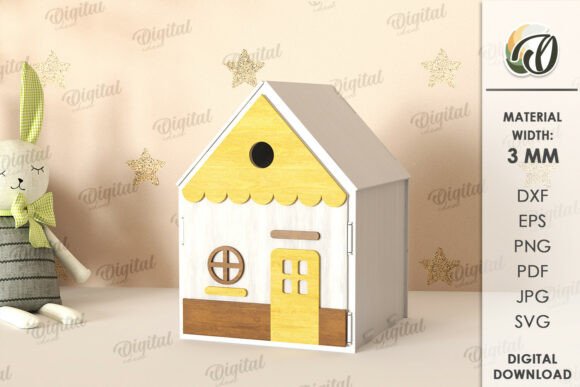
This particular design sits in a sweet spot. It is not just a cute illustration; it is a structural graphic with depth. The visual personality is rustic yet modern, leaning heavily into the "handmade" aesthetic that performs exceptionally well in the nursery and parenting niches. It feels premium, decorative, and undeniably clickable. However, before adding this to your library of design assets, it is crucial to understand exactly what you are buying and how to deploy it effectively.
Understanding the Digital Product Reality
Let’s address the elephant in the room immediately. The listing explicitly states: "This is a digital product. No physical goods will be sent – The photos are intended only for inspiration." This is standard practice in the creative marketplace space, but it trips up many new sellers who expect a finished wooden toy. You are purchasing a zip folder containing 1 design in SVG and DXF formats. This distinction changes everything about how you market and use the file.
You are acquiring a graphic design asset meant for fabrication or digital reproduction. The files provided allow for precision cutting, which makes this ideal for laser cutters, CNC machines, and even high-end vinyl plotters like Cricut or Silhouette. Because the source is vector-based (SVG/DXF), the scalability is infinite, making it a robust foundation for various printable designs and commercial design projects.
Real-World Application: From File to Revenue
Imagine you are preparing a new collection for your online shop targeting parents and craft enthusiasts. Here is how the 3D Wooden Children s House Box can be integrated into your workflow to maximize ROI:
- Laser Cut & Sublimation Products: Since you have the DXF and SVG files, you can send these directly to a laser cutter to produce actual wooden boxes or plaques. These make excellent high-ticket items on Etsy. Alternatively, use the design as a sublimation design for tumblers, mugs, or tote bags. The clean lines translate beautifully to fabric and ceramic surfaces.
- Digital Downloads & Planners: Convert the SVG into a high-resolution PNG with a transparent background. Use this as a key element in digital planner stickers, scrapbooking kits, or printable wall art. Parents love decorating nurseries, and this house motif fits perfectly within small business branding for kids' decor shops.
- Canva Templates: If you sell editable templates, incorporate this house graphic into invitation sets for baby showers, birthday parties, or nursery reveal announcements. Pair it with playful fonts to create instant-download Canva template bundles that customers can customize themselves.
- Seasonal Bundles: This asset is versatile enough for seasonal marketing. In summer, it could represent a beach house theme. In winter, add snow elements via editing software to create holiday-themed sticker design packs or gift tag templates.
Visual Strategy and Product Presentation
In the world of digital downloads and print-on-demand, your thumbnail is your storefront. The 3D Wooden Children s House Box offers strong visual hierarchy because of its geometric simplicity and warm, wood-toned color palette (assuming you maintain those tones or adapt them to your brand colors). When creating your product mockup previews, avoid cluttering the frame. Let the house stand alone or pair it with minimal props like small toys or paintbrushes to suggest creativity rather than competition.
For Etsy product listings, use the SVG to generate layered images. Show the flat vector file, then show a mockup of it laser-cut from plywood, and finally, show it painted in pastel colors. This visual storytelling builds customer trust and demonstrates the versatility of the design bundle. It helps the buyer visualize the end result, whether they are a crafter using their own machine or a customer buying a finished item.
Where to Exercise Caution
No asset is perfect for every application. There are specific scenarios where the 3D Wooden Children s House Box might struggle if not handled correctly:
- Tiny Sticker Details: If you plan to turn this into a roll of tiny die-cut stickers, ensure the internal details of the house windows and doors are large enough to hold up during the weeding process. Complex internal cut lines can sometimes fail on small-scale productions.
- Low-Resolution Print Products: Always verify the file resolution before uploading to a print-on-demand service. While vectors scale infinitely, if you export a raster version for a large banner, ensure it is at least 300 DPI to avoid pixelation.
- Crowded Thumbnails: On mobile devices, complex graphics can become muddy. Test your design at thumbnail size. If the outline becomes too thin or indistinct, simplify the layers or increase the stroke weight in your design software.
- Dark Backgrounds: Wood textures often rely on light contrast. Using this asset on a dark background may require adjusting the brightness or adding a white border/layer to ensure it pops against the backdrop.
Practical Seller Notes for Implementation
To ensure your launch is smooth and professional, follow these technical checks before publishing any commercial license-eligible products:
- Test Real Mockups: Do not rely solely on stock images. Generate your own mockups using tools like Placeit or Canva to see how the house looks on actual merchandise like t-shirts, mugs, and tote bags.
- Check Transparency: Verify the PNG transparency by placing the image over different colored backgrounds. Ensure there are no white halos around the edges, which can ruin the visual hierarchy of your design.
- Inspect Cut Quality: Open the SVG in Cricut Design Space or Silhouette Studio. Check for overlapping lines or unnecessary nodes that might cause the machine to cut twice or miss sections. Clean up the paths for optimal performance.
- Font Pairing: When creating accompanying text for your listings or final products, choose complementary typefaces. A serif font adds elegance, while a handwritten font enhances the handmade feel. Avoid overly bold display fonts that compete with the house graphic.
- Organize Your Files: For digital buyers, organization is key. Provide clear instructions on how to open the files. Include both SVG and DXF formats, and perhaps a PDF guide showing suggested sizes for different projects.
- Confirm Licensing: Finally, double-check the commercial license terms. Most digital assets allow for unlimited sales of physical products made from the design, but restrictions may apply to reselling the digital file itself. Ensure you are compliant to protect your brand identity and avoid legal issues.
The 3D Wooden Children s House Box is more than just a cute icon; it is a flexible tool for building a cohesive, profitable online store. By treating it as a foundational graphic design asset rather than a standalone product, you unlock its potential across social media graphics, packaging design, and diverse merchandise categories. Approach it with strategic planning, test rigorously, and you will find it serves as a reliable pillar in your design portfolio.